1st – 2nd June 2022
With all the paperwork (hopefully) safely stowed in my rucksack, we set off at 8 a.m. for Birmingham Airport in a taxi driven by one of the parents of a child I used to teach, Rebecca Pearson. The journey proved an interesting one, as we caught up on family news. Fortunately, she had been a pleasant and studious pupil and seemed to have done well in later life.
We were a little concerned that the chaos experienced by travellers at the airport the previous day might cause problems, but we needn’t have worried. Check-in opened on time, and we were third in the queue. We sailed through Security and Passport Control and were soon settled in one of the lounges, waiting for our gate to be called. The flight departed slightly late, due to a shortage of baggage handlers, but this delay was made up during the 7.5-hour flight to Dubai. Emirates has a solid reputation, and it didn’t disappoint, with regular meals and drinks and an excellent entertainment system.
Our early morning arrival in Dubai meant the airport wasn’t too crowded, which made navigating to our next gate, via a long bus ride through the vast terminal, relatively straightforward. The next leg of our journey was to Mauritius, and we had a stroke of luck at the departure gate when we met an elderly Australian lady who was also transiting to Madagascar. A charity worker based in Antananarivo, she, like us, didn’t have a boarding pass for the final leg of the journey. However, she managed to persuade a helpful member of staff to print them out for us, removing a minor worry ahead of landing.
This was another Emirates flight, this time aboard a new A340/800 with a double-decker layout. It was very smart, with extra legroom, and we managed to get some sleep between the generous meals. Masks had to be worn at all times, except when eating. However, unlike on the first leg, quite a few passengers from the Indian subcontinent chose to disregard the crew’s repeated reminders.
We landed at 9 a.m. to what promised to be a glorious day for both islanders and their visitors. Having holidayed on this stunningly beautiful island before, we recognised the distinctive mountainous landscape as we descended. There can’t be many airports where, even with a five-hour wait for your next connection, the views from the lounge windows remain so captivating.
As we were in transit, we bypassed baggage reclaim and joined a short but slow-moving queue to have our documents checked: proof of RT-PCR test, vaccination certificates, baggage tags, passports, and a green form… which we didn’t have. Nor did several other travellers, which explained the sluggish pace. Fortunately, it only took a few minutes to complete, and soon we were through security and on our way once more.
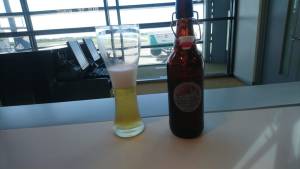
After checking the location of our next departure gate, we had a brief chat with our new Australian friend before settling into one of the airport’s restaurants for a much-needed drink. Sue was content with water, but I spotted an intriguing local cask beer that looked far too refreshing to ignore, and I indulged. Sue wasn’t impressed by the price.
A short flight of 1 hour and 55 minutes to Antananarivo followed. I rather enjoyed the eclectic meal on board, though Sue was less enthusiastic, despite consuming it in rapid time.
Antananarivo is located towards the centre of the island, and the clear skies provided an excellent view of Madagascar’s topography. The remote, mountainous, and green-shrouded landscape scrolled past smoothly below us, interrupted only by winding waterways and the occasional red dirt road leading seemingly nowhere. For much of our descent, there was little sign of habitation, though the numerous wisps of smoke from slash-and-burn farming drifting lazily into the sky betrayed life below and added their own modest contribution to global warming.
We navigated the rigmarole of Madagascan entry requirements with nervous efficiency, waving wads of paperwork and accumulating more as we moved through the terminal. With our visas secured and our lateral flow tests both passed and paid for, we emerged as the first from our group to exit the airport building. Once our names had been ticked off by our guide, we exchanged some US dollars at the money desk.
There are 19 people in our group, 9 of whom arrived on our flight. Once the final couple appeared through Arrivals, we boarded a minibus and began our journey into the city.
It took an hour to reach the Chalet des Roses, as traffic became increasingly difficult the closer we got to the centre. Antananarivo is notorious for its horrendous traffic, and this was rush hour! Crawling along on barely tarmacked roads at walking pace, however, gave us ample time to get to know our fellow travellers, and we all seemed to hit it off well.
After checking in and briefly exploring our room, we joined all but two members of the group for a short introductory briefing and a chance to get to know each other. The two missing travellers were due to arrive later in the night. Sue retired early, while I joined a small group in the bar to sample some of the local brews.
3rd June 2022
It was a quiet night, though around 2 a.m. I thought I heard a woman sobbing somewhere on the street below our window. I looked out but could see nothing. After about twenty minutes, the noise stopped.
Showered and dressed, we joined a few others for breakfast at 8 a.m. Ordering was a bit confusing (we had no French), and what eventually arrived was disappointing. Partly fed, we joined the rest of the group on the coach at 9.30 a.m. to begin our journey to the leafy city of Antsirabe, stopping en route in the smaller town of Ambatolampy to visit an aluminium pot factory.
From our first impressions at the airport, there was little doubt that Madagascar is an extremely poor nation, still struggling with recent adversity and clearly in desperate need of tourist income. Today’s journey only reinforced that view. With an average daily wage of just $2.50 and high unemployment, most people rely on agriculture. The struggle for survival was all too visible as we passed families working the land or doing whatever they could to scrape together a living.
Our bus rattled along a road barely suitable for modern vehicles: donkeys, bullocks, and carts were more appropriate modes of transport, and we encountered many. We often had to slow down or swerve precariously to avoid them. In one incident, we even bumped into the end of a ladder sticking out of the back of a rickety van! The road surface alternated between deep ruts and brief stretches of crumbling tarmac, hardly a highway by any standard.
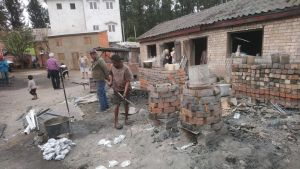
Meandering through endless ravines bedecked with tiers of paddy fields and a variety of vegetables, we eventually reached the busy town of Ambatolampy. A single-track railway runs through its centre, and nestled alongside it, amid a rather scruffy conurbation, is the aluminium factory.
Calling it a “factory” might be generous; it’s more of a medium-sized courtyard surrounded by small buildings that, from the outside, resemble entrances to hell. In reality, they house the various stages of metalwork: melting, pouring, moulding, filing, and buffing. It was utterly fascinating. There was no sign of health and safety, just young boys working at breakneck speed, with no room for error. We left with a newfound respect for the humble cooking pot, and many in our group bought one or two of the more decorative, tourist-friendly items crafted by these skilled Malagasy workers.
Lunch was taken at a pleasant roadside restaurant just a couple of minutes’ drive away, before we embarked on a 3.5-hour juddering journey to Antsirabe, known as the “city of water”, and our accommodation for the night: the Couleur Café. As we were scheduled for a very early departure the next morning, we made a quick stop at a supermarket to stock up on snacks for tomorrow’s 8–10 hour journey.
Our accommodation was a collection of elegant individual chalets, comfortable, charming, and entirely at odds with the surrounding town. After an early evening meal, we retired to bed in preparation for the long day ahead.


Leave a Reply